
Ascend Composite Siding vs James Hardie: Which Premium Siding Is Right for Your NC Home?
Comparing Ascend Composite Cladding and James Hardie fiber cement siding. Learn about maintenance, warranty requirements, cost, and which premium siding option delivers better long-term value for North Carolina homes.
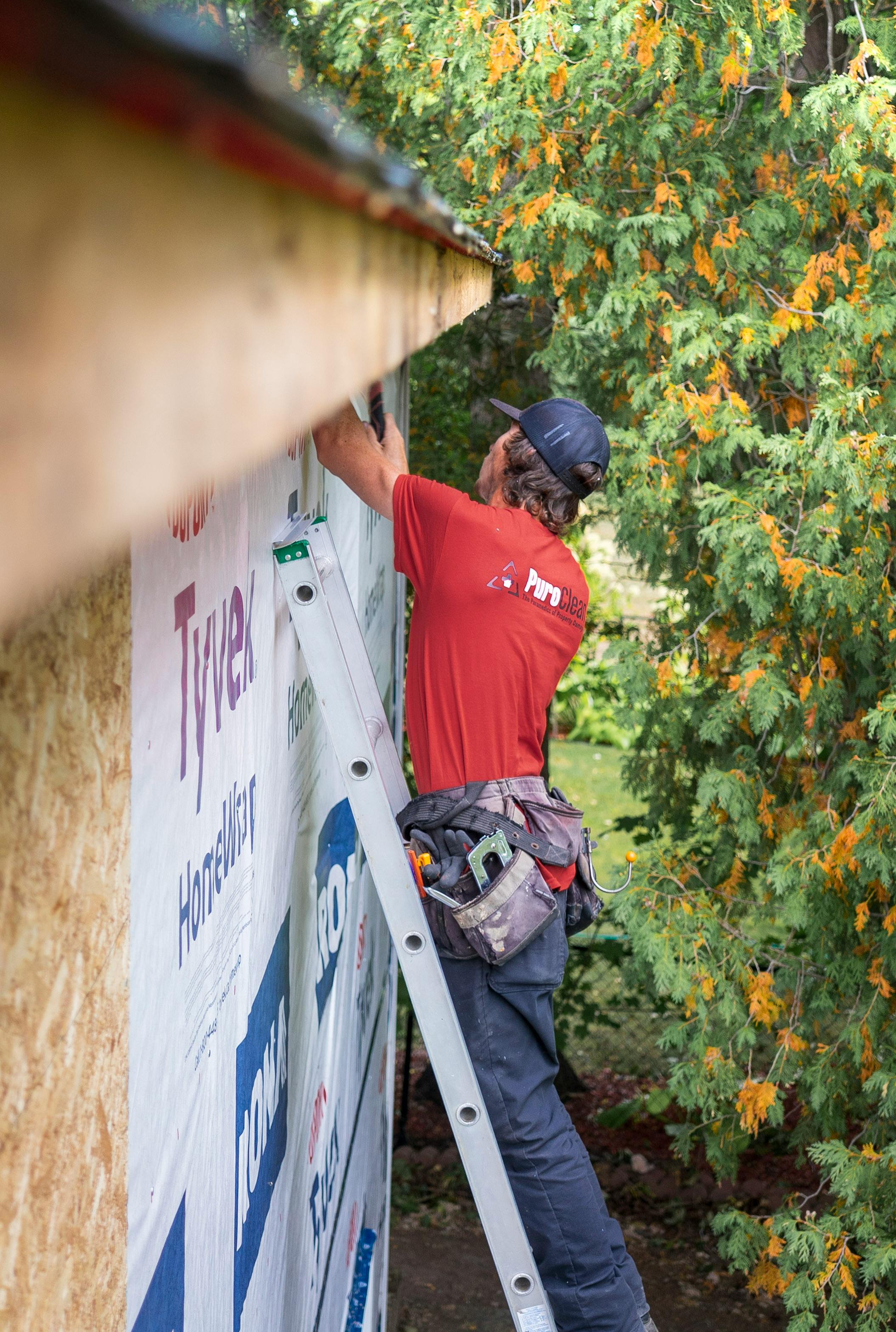
As one of the few contractors in North Carolina certified to install both James Hardie fiber cement and Ascend Composite Cladding, we get asked constantly: "Which one should I choose?"
After installing hundreds of projects with both products, we've seen the real-world performance, maintenance requirements, and long-term costs. We've also watched homeowners deal with James Hardie's maintenance reality years later. Here's our completely honest assessment.
The Short Answer
Ascend Composite Siding is superior for North Carolina homes. While James Hardie built its reputation on durability, Ascend surpasses it in every category that matters to homeowners: premium wood aesthetics (not cement-looking), true zero maintenance (not "low maintenance"), hassle-free warranty (not easily voided), and better long-term value (saves $7K-$20K over 30 years).
Bottom line: Ascend delivers the premium wood look homeowners want with none of the maintenance headaches James Hardie creates.
Quick Comparison Table
| Feature | Ascend Composite Cladding | James Hardie Fiber Cement |
|---|---|---|
| Appearance | Premium authentic wood grain texture & depth | Flat cement surface with painted finish |
| Maintenance | True zero maintenance - Ever | "Low maintenance" but requires painting/caulking every 10-15 years |
| Long-Term Cost | No additional costs after install | $7,000-$20,000+ in maintenance over 30 years |
| Warranty | Lifetime limited warranty (no maintenance required) | 30-year warranty (strict maintenance requirements, easily voided) |
| Installation Time | 5-7 days (20-30% faster) | 7-10 days (heavy, complex installation) |
| Realistic Wood Look | Dimensional texture looks like $15-20/sq ft wood | Obviously cement-based up close |
| Durability | Won't crack, chip, or damage at edges | Can crack/chip on impact, vulnerable at cut edges |
| Color Through Material | Color throughout entire board | Paint coating can chip/fade at joints |
| Fire Rating | Class A (meets all NC codes) | Non-combustible (Class A+) |
The Maintenance Factor: Where Ascend Wins Big
James Hardie's Hidden Maintenance Costs
James Hardie markets itself as "low maintenance," but there's a catch many homeowners don't discover until years later:
James Hardie ColorPlus® requires periodic maintenance:
- Caulking around windows, doors, and joints must be inspected and reapplied every few years
- Touch-up painting needed at cut edges, nail holes, and damaged areas
- Full repainting recommended every 10-15 years to maintain warranty
- Failure to maintain can void your warranty
Real-world cost example: A typical 2,000 sq ft home requires $3,000-$6,000 for professional repainting every 10-15 years. Over 30 years, that's $6,000-$18,000 in maintenance costs many homeowners don't budget for.
Ascend's True Zero-Maintenance Promise
Ascend Composite Cladding requires absolutely no painting, staining, or sealing. Ever.
- Color is integrated throughout the material (not just a surface coating)
- No caulking maintenance required
- Scratches and scuffs are virtually invisible due to through-body color
- Lifetime warranty requires zero maintenance to remain valid
The North Carolina advantage: In our humid climate with intense UV exposure, zero-maintenance siding is a game-changer. No ladders, no contractors, no paint fumes, no expense.
Warranty Comparison: Simple vs Complex
James Hardie's Warranty Challenges
James Hardie offers a 30-year limited warranty on their products, but here's what many homeowners discover too late:
Warranty can be voided if:
- Installation wasn't performed by a certified contractor
- Regular maintenance wasn't documented (caulking, painting)
- Improper cleaning methods were used
- Changes made to the home affect the siding
- You didn't use James Hardie-approved trim and accessories
- Climate-specific installation requirements weren't followed
Filing claims can be difficult:
- Requires extensive documentation
- Must prove proper maintenance
- Often requires inspection by James Hardie representative
- Labor coverage limited or excluded
- Many homeowners report claim denials due to "improper maintenance"
Ascend's Straightforward Warranty
Ascend offers a lifetime limited warranty with far fewer requirements:
- No maintenance documentation required
- Covers material defects and color fade
- Transfer to new homeowners
- Simple claim process
- No annual inspections required
Bottom line: Ascend's warranty protects you without creating a maintenance burden.
Cost Analysis: Upfront vs Long-Term
Initial Investment
Both products are premium siding options with comparable upfront costs:
- James Hardie: Premium investment for fiber cement durability
- Ascend: Similar premium investment for composite performance
Contact us for a free quote on your specific project.
Long-Term Cost Comparison
This is where Ascend pulls ahead significantly:
James Hardie 30-year cost of ownership:
- Initial installation
- Repainting every 10-15 years: $6,000-$18,000+
- Caulking maintenance: $500-$1,500+
- Touch-up repairs: $300-$1,000+
- Total additional cost: $7,000-$20,000+ over 30 years
Ascend 30-year cost of ownership:
- Initial installation
- Additional maintenance: $0
- Total additional cost: $0
The difference: Ascend pays for itself within 10-15 years through eliminated maintenance costs.
Aesthetics: Authentic Wood vs Cement Texture
Ascend's Wood-Like Appearance
Ascend Composite Cladding is engineered to replicate real wood:
- Deep, authentic wood grain patterns
- Natural wood texture that feels real to the touch
- Multiple profiles (lap, board & batten, shingle styles)
- Rich color variations that mimic real wood species
- No repetitive patterns (each board looks unique)
James Hardie's Cement Look
While James Hardie offers textured finishes, it's still cement:
- Smooth or woodgrain textures (but uniform appearance)
- ColorPlus colors are beautiful but clearly painted
- Up close, the cement composition is apparent
- More contemporary/modern aesthetic than natural
For homeowners wanting the wood look without wood maintenance, Ascend is unmatched.
Installation Considerations
Ascend Installation Advantages
Lighter weight = faster installation:
- Easier to handle and cut
- Less labor-intensive
- Faster project completion (typically 5-7 days for full home)
- Lower installation costs
More forgiving:
- Easier to work around complex architectural details
- Simpler trim integration
- Less risk of damage during installation
James Hardie Installation Challenges
Heavy material = specialized requirements:
- Requires experienced installers (we're Elite Preferred certified)
- Special cutting equipment needed (creates silica dust)
- Longer installation time (typically 7-10 days for full home)
- More expensive installation labor
- Must follow strict climate-specific installation methods
This matters in North Carolina: Our humidity and temperature swings require precise James Hardie installation techniques. Improper installation voids the warranty and causes problems years later.
Durability & Performance in North Carolina
Both Products Excel in NC Climate
Ascend Composite Cladding:
- Resists moisture, rot, and insects
- Won't warp or swell in humidity
- Excellent wind resistance (tested to 200+ mph)
- Freeze-thaw cycles don't affect it
- Won't crack or chip from impacts
James Hardie Fiber Cement:
- Engineered for climate zones (we use their Southeast formula)
- Moisture-resistant (but must be installed correctly)
- Excellent wind resistance
- Resistant to rot and insects
- Can crack or chip from hard impacts
- Vulnerable at cut edges if not properly sealed
The edge goes to Ascend: Won't crack, chip, or develop issues at cut edges.
Fire Resistance
James Hardie wins on fire rating:
- Non-combustible (Class A+ fire rating)
- Excellent for wildfire-prone areas
- May reduce insurance premiums
Ascend still excellent:
- Class A fire rating (same as most roofing)
- Meets all building codes
- Suitable for virtually all applications
In North Carolina: Wildfire risk is minimal in most areas, making both products equally suitable.
Environmental Considerations
Ascend's Environmental Profile
- Made from recycled materials
- Lower embodied energy than cement production
- No toxic chemicals
- Fully recyclable at end of life
- Lighter weight = less transportation fuel
James Hardie's Environmental Profile
- Cement production is energy-intensive
- Silica dust during cutting requires precautions
- Durable product reduces waste over time
- Heavy weight increases transportation emissions
For eco-conscious homeowners, Ascend has advantages.
Which Siding Should YOU Choose?
Choose Ascend Composite Cladding (Recommended for Most Homeowners)
Ascend delivers superior aesthetics and performance for North Carolina homes:
- Premium wood-like appearance - Deep, authentic grain patterns that look and feel like real wood (far more realistic than fiber cement's flat texture)
- True zero maintenance - Never paint, stain, seal, or caulk. Ever.
- Faster installation - Lighter material means 20-30% faster completion (5-7 days vs 7-10 days)
- Hassle-free warranty - Lifetime coverage with no maintenance documentation required
- Lower lifetime cost - Save $7,000-$20,000+ over 30 years compared to fiber cement maintenance
- Superior repairability - Color goes through entire board, so scratches/cuts are invisible
- More premium look - Natural wood aesthetics elevate your home's curb appeal beyond cement-based products
- Better detail work - Complex architectural features are easier to execute beautifully
- Eco-friendly - Made from recycled materials with lower carbon footprint
- Peace of mind - No warranty worries, no maintenance schedule, no callbacks
Bottom line: Ascend is the smarter investment for homeowners who want premium aesthetics without the premium maintenance headaches.
James Hardie May Be Better If:
James Hardie fiber cement has limited situations where it makes sense:
- Maximum fire resistance required - Non-combustible rating (though Ascend's Class A rating meets all NC building codes)
- You don't mind ongoing maintenance - Comfortable repainting every 10-15 years and maintaining caulk/joints
- You want the brand name - Value the James Hardie brand recognition specifically
- Contemporary/industrial aesthetic - Prefer the flat cement look over authentic wood texture
Reality check: Most homeowners choose James Hardie for the brand name, then regret the maintenance requirements years later. We've replaced numerous James Hardie installations with Ascend for exactly this reason.
Our Recommendation as Certified Installers of Both
We're James Hardie Elite Preferred contractors (top 3% nationwide) and Ascend Certified installers. We profit equally from installing either product, so we have zero bias. Our honest assessment after hundreds of installations:
Ascend Composite Cladding is superior for 9 out of 10 North Carolina homeowners.
Here's why we recommend Ascend for most projects:
-
Superior aesthetics - Ascend's authentic wood grain texture looks like $15,000 custom wood siding. James Hardie looks like painted cement up close.
-
True zero maintenance - Ascend requires nothing. James Hardie requires painting ($3K-$6K every 10-15 years), caulking maintenance, and warranty documentation.
-
Better long-term value - Over 30 years, you save $7,000-$20,000+ in maintenance costs versus James Hardie.
-
More premium appearance - Ascend elevates curb appeal with realistic wood texture. James Hardie has a utilitarian cement look.
-
Faster installation - We complete Ascend projects 2-3 days faster, minimizing disruption to your home.
-
Hassle-free warranty - Ascend's lifetime warranty has no hoops to jump through. James Hardie's warranty requirements frustrate homeowners.
-
Better for NC climate - Our humid environment is rough on fiber cement joints and caulk. Ascend has no vulnerable joints.
When we install our own homes and our families' homes, we choose Ascend. That tells you everything.
James Hardie only makes sense if you specifically need non-combustible siding for fire insurance requirements (rare in NC) or prefer an industrial/contemporary cement aesthetic over natural wood beauty.
See Both Products Before You Decide
We encourage every homeowner to:
- See physical samples of both products
- Visit completed projects with both sidings
- Review warranty documents for both products
- Calculate long-term costs including maintenance
We'll show you both options, explain the real-world differences, and help you make the right decision for your home and lifestyle.
Get Your Free Siding Comparison & Quote
We're certified to install both Ascend Composite Cladding and James Hardie fiber cement. We'll provide:
- Side-by-side product samples for your home
- Honest assessment of which product fits your needs
- Detailed quotes for both options
- No-pressure consultation - we want you to make the right choice
- 240-month financing available (20 years to pay)
Contact Home Solutions NC today for your free consultation and quote.
Frequently Asked Questions
Q: Can Ascend really look as good as real wood? A: Ascend looks BETTER than most real wood siding because it has perfect grain patterns without knots, warping, or defects. The deep dimensional texture and natural color variation are so realistic that most people need to touch it to confirm it's not wood. James Hardie's flat cement texture with painted finish doesn't come close to Ascend's authentic wood appearance.
Q: Why would anyone choose James Hardie if Ascend is superior? A: Honestly, most people choose James Hardie because they don't know Ascend exists, or they're swayed by brand recognition. The only legitimate reason to choose James Hardie is if you need non-combustible siding for very specific fire insurance requirements (extremely rare in North Carolina). After experiencing the maintenance reality, many James Hardie owners wish they'd chosen Ascend.
Q: Is Ascend a "cheap" alternative to James Hardie? A: No - Ascend is actually the MORE premium product. Similar upfront investment, but superior aesthetics (realistic wood vs painted cement), zero maintenance (vs $7K-$20K over 30 years), and hassle-free warranty. Ascend is what you choose when you want the absolute best long-term value and appearance.
Q: How long does Ascend really last? A: Ascend carries a lifetime limited warranty and is engineered to last 50+ years. It won't rot, warp, crack, or chip like some materials, and since color goes throughout the material, it maintains appearance indefinitely.
Q: Will painting James Hardie void the warranty? A: No, but failing to paint it when needed can. James Hardie requires proper maintenance (including repainting when the finish degrades) to maintain warranty coverage. This is often a surprise to homeowners who assume "low maintenance" means no maintenance.
Q: Can I install Ascend myself? A: While technically possible, we don't recommend it. Professional installation ensures optimal performance and maintains warranty coverage. Plus, improper installation can lead to moisture issues or void your warranty.
Q: Which siding has better resale value? A: Both premium siding options increase resale value significantly (70-80% ROI). Buyers appreciate James Hardie's brand recognition and Ascend's zero-maintenance promise equally. The key is proper installation and good condition.
Q: If Ascend is superior, why are you still a James Hardie Elite Preferred contractor? A: Great question. We maintain our James Hardie Elite Preferred status because some customers specifically request it by name (brand loyalty), and there are rare situations where non-combustible siding is required. However, when customers see both products side-by-side and understand the real-world maintenance differences, about 80% choose Ascend. We're honest about what we'd install on our own homes: Ascend, every time.
Q: Will Ascend look cheap or fake compared to James Hardie? A: It's actually the opposite. Ascend's detailed wood grain texture looks like premium wood siding ($15-20/sq ft if it were real wood). James Hardie has a flat, obviously painted cement surface that lacks the depth and authenticity of Ascend's wood replication. When neighbors see Ascend siding, they often think it's expensive real wood until they learn it's maintenance-free composite.
Related Articles
James Hardie vs. Vinyl Siding: Cost Comparison 2024
Compare James Hardie fiber cement siding vs. vinyl siding costs, lifespan, and maintenance for North Carolina homes. Which option provides better long-term value?